
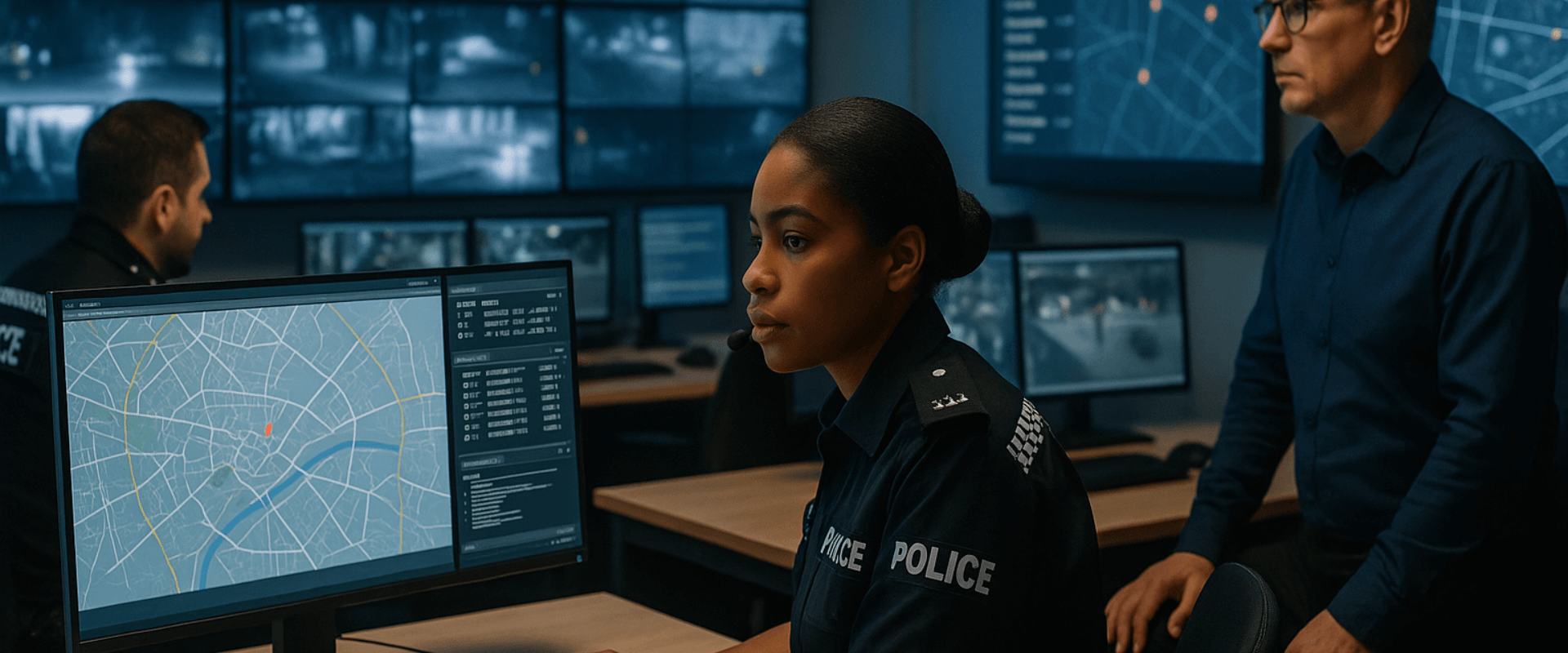
In policing, few systems are as critical as command and control. It sits at the heart of operational effectiveness, underpinning response to incidents, management of resources, and ultimately the safety of the public. When it works well, it enables fast, coordinated decision-making. When it fails – even briefly – the consequences can be severe.
That criticality creates a paradox. Everyone recognises the need to modernise command and control platforms, yet the risks of doing so can make forces hesitant to change. Legacy platforms persist well past their natural lifespan, not because they’re fit for purpose, but because the danger of disruption feels too high.
The Complexity Behind Command and Control
Command and control is not a standalone application. It is an ecosystem – a hub that must integrate with dozens of other systems, including:
- Telephony and radio networks.
- Geographic information systems and mapping tools.
- National and local intelligence platforms.
- Resource management and rostering.
- Case management and records systems.
Each integration adds dependency. The more connected command and control becomes, the harder it is to change. That complexity is why modernisation projects often run over budget, over time, or fail to deliver.
The Emerging Challenges
Modern command and control faces additional pressures that weren’t present when many legacy systems were first deployed:
- Citizens expect 24/7 availability. Outages aren’t tolerated, yet legacy architectures often lack the fault-tolerance of modern designs.
- As a critical national service, command and control platforms are prime targets for cyber threats. Hardening and monitoring are no longer optional extras.
- Frontline officers and control room staff increasingly rely on mobile, cloud-based, and data-driven tools. Command and control must keep pace.
- AI and advanced analytics promise to improve prioritisation, situational awareness, and response, but only if they can be safely integrated into core systems.
Against this backdrop, the question is not whether forces need to modernise command and control, but how to do it safely without degrading service.
Safe Modernisation Requires Structure
Modernising command and control isn’t just an IT upgrade. It is an organisational transformation. Safe change requires:
Clear enterprise architecture. Forces need an architectural blueprint that defines how systems, data, and integrations fit together – not just today, but as they evolve. This provides a roadmap that reduces risk and ensures resilience.
Governed partner engagement. Command and control is too important to be left to piecemeal vendor engagements. Forces need trusted technology partners who can work within a governed framework, aligned to policing standards and security requirements.
Incremental transformation. Big-bang cutovers are high-risk. Safe modernisation often means phased delivery, with fallbacks and contingencies built in.
Assurance at every stage. Independent review during procurement, design, and delivery helps ensure projects remain on time, on budget, and aligned to outcomes.
The Way Forward
Command and control will always be critical. That won’t change. What must change is the way forces approach its transformation. By embedding enterprise architecture disciplines, enforcing structured governance, and working with the right partners, it is possible to modernise safely – protecting continuity of service while enabling new capabilities.
Done well, modernisation doesn’t just preserve critical operations; it enhances them. Forces gain resilient, secure, and flexible command and control platforms that integrate with modern tools, support AI, and scale into the future.
At dstilld technologies, this is where we focus: helping policing transform command and control without taking unnecessary risks. Because when a system is this critical, you only get one chance to get it right.
Let's Talk
If your force is facing the challenge of modernising command and control, let’s talk.
At dstilld technologies, we combine deep public sector expertise with enterprise architecture methods to help forces plan, procure, and deliver transformation safely. From early assessment and partner strategy through to delivery assurance, we make sure modernisation projects land on time, on budget, and without compromising service.
👉 Get in touch today to start a conversation about your command and control transformation.